
This is part of an ongoing series of state-by-state guides to verifying resale certificates. Texas warrants specific attention as it is widely considered one of the most complex and audit-aggressive jurisdictions in the United States. You can find the full list of articles here: The Resale Certificate Problem Across the US.
With over 1,500 local taxing jurisdictions and a rigorous audit program, the Texas Comptroller of Public Accounts keeps a close watch on tax-exempt transactions. For a seller, accepting a Texas resale certificate is a high-stakes liability event. If that certificate is invalid, expired, or improperly completed, the Comptroller will hold you responsible for the uncollected tax, plus interest and penalties.
This guide walks you through exactly how to verify a Texas Sales and Use Tax Permit manually using the state’s official “Taxpayer Search” portal.
The Legal Standard: “Good Faith” in Texas
Under Texas Tax Code § 151.054 and 34 Texas Administrative Code § 3.285, a seller is relieved of the obligation to collect sales tax if they accept a properly completed resale certificate in good faith.
34 TAC § 3.285 (g)
“A seller who accepts a resale certificate in good faith is not required to investigate the truth of the representations made in the certificate… However, a certificate is not accepted in good faith if the seller has knowledge of facts that would give a reasonable person cause to believe that the certificate is not valid.”
In an audit, the burden of proof is on the seller. The Comptroller will verify:
- The Certificate: A fully completed Texas Form 01-339.
- The Verification: Evidence that the purchaser’s 11-digit Taxpayer ID was active on the date of the sale.
What You Need Before You Start
- The purchaser’s 11-digit Texas Taxpayer ID (starts with a 1 or 3).
- The purchaser’s legal business name (for cross-referencing).
- Access to the Texas Taxpayer Search portal.
description How to Verify a Texas Resale Certificate Manually
4 Steps 3 minutes Created by ExemptCheck
How to Verify a Texas Resale Certificate Manually
Pro-Tip:
Texas Taxpayer IDs are always 11 digits. If your customer provides a 9-digit number, they may be giving you their Federal EIN instead. You must have the 11-digit state ID to verify their status on the Comptroller’s portal.
The Texas Comptroller provides a public portal for verifying sales tax permits. You do not need a login to use the “Taxpayer ID” search path.
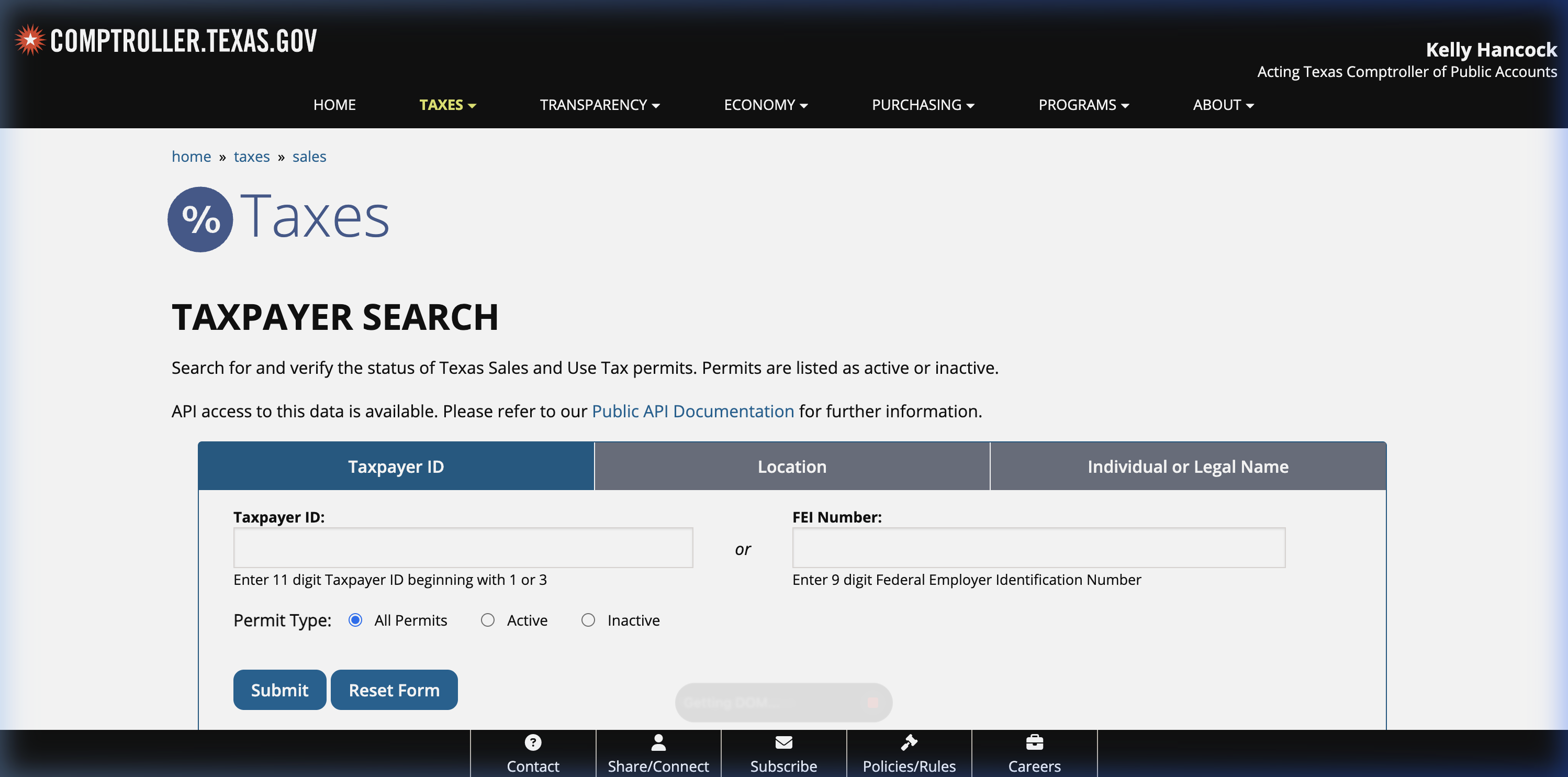
Enter the 11-digit Taxpayer ID
Type the 11-digit number into the ‘Taxpayer ID’ field. Texas IDs almost always begin with the number 1 or 3. Ensure you select ‘All Permits’ or ‘Active’ to get the most relevant result.
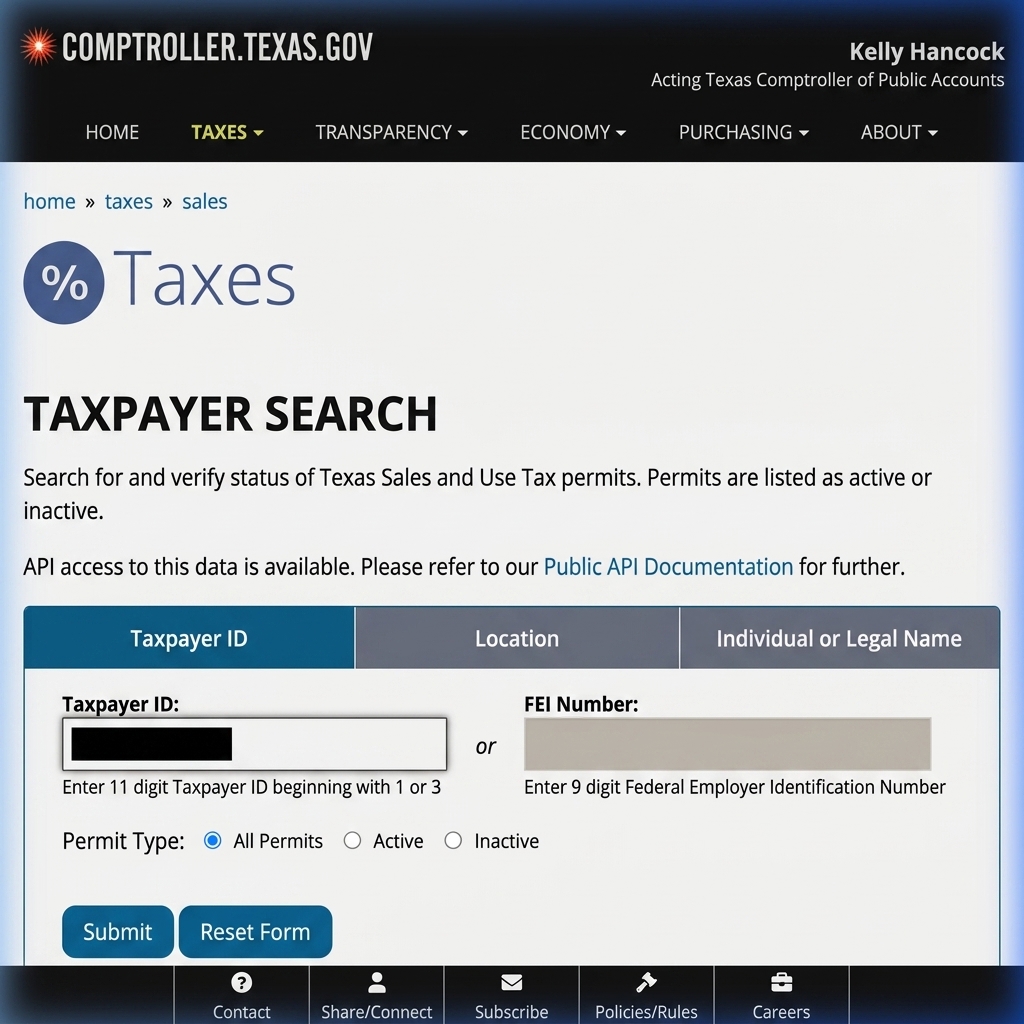
Submit the Search Request
Click the blue ‘Submit’ button. The portal will query the live database of Texas taxpayers. Unlike some other states, Texas usually returns results almost instantly.
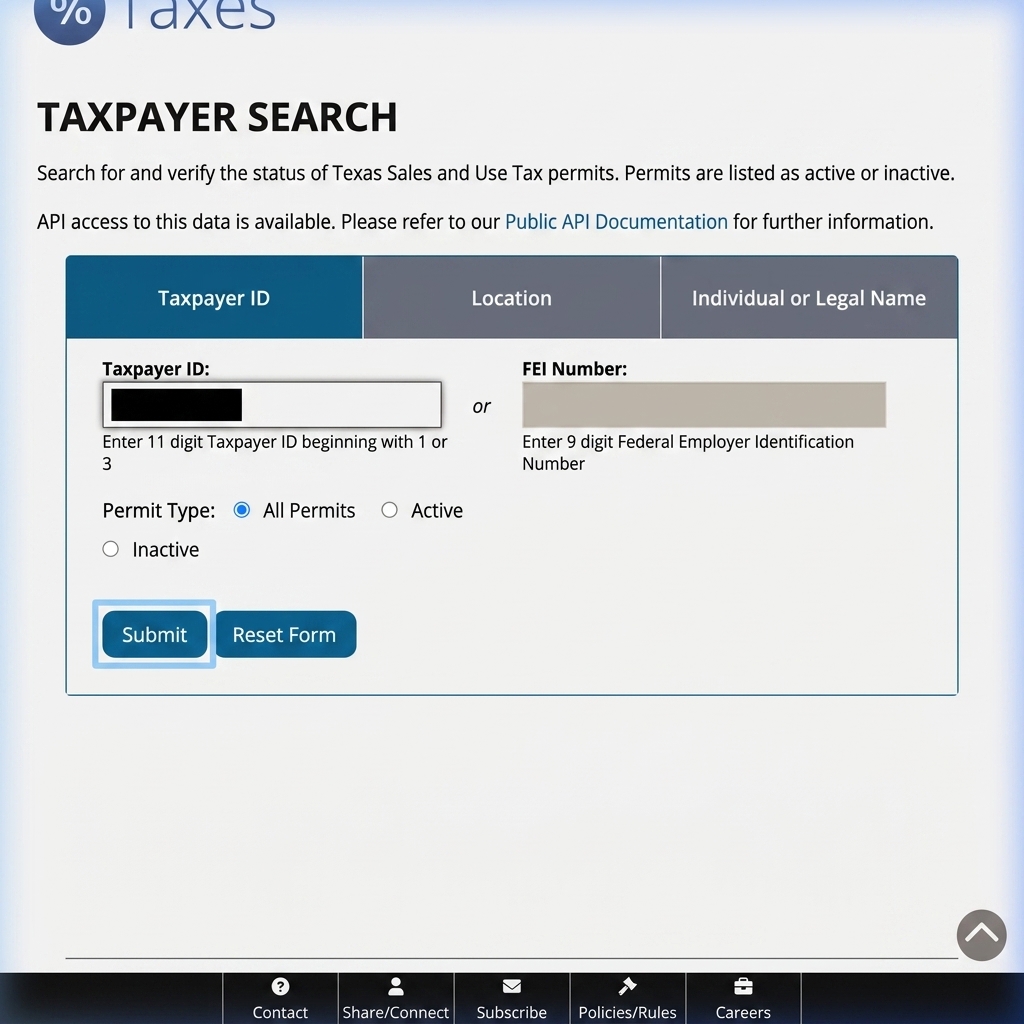
Analyze the 'Permit Status' Result
Look for the “Permit Status” field. If it says ACTIVE, the purchaser is authorized to make tax-free purchases for resale. If it says INACTIVE or is not found, you must collect sales tax. Capture a screenshot of this page for your audit records.
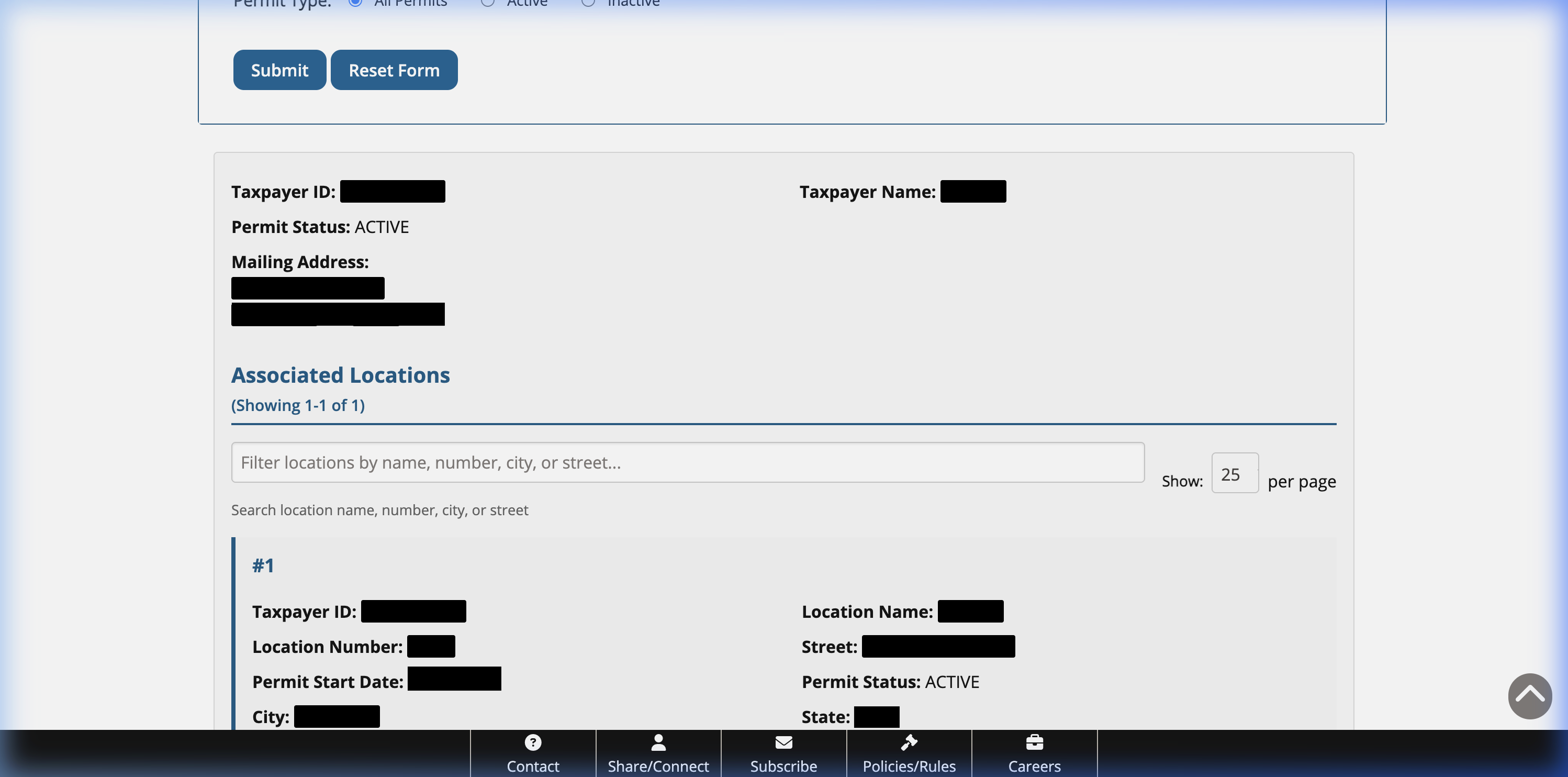
Understanding the Texas Result Data
The Texas portal provides several critical data points that should be cross-referenced with the certificate provided by the buyer:
| Data Point | Audit Significance |
|---|---|
| Taxpayer Name | Must match the business name on the resale certificate. |
| Permit Status | Must be “ACTIVE” on the date of the transaction. |
| Location Name/Address | Confirms the physical nexus and nature of the business. |
| Mailing Address | The address of record for tax correspondence. |
What Makes a Texas Certificate Valid?
According to Rule 3.285, a document is only a valid Texas resale certificate if it is a completed Form 01-339 containing:
- Purchaser Information: Legal name and address of the purchaser.
- Taxpayer ID: The 11-digit Texas sales tax permit number (or an out-of-state registration number).
- Description of Items: A description of the items generally sold by the purchaser and the items being purchased for resale.
- Resale Statement: A statement that the items are being purchased for resale in the regular course of business.
- Signature & Date: A valid signature from the purchaser and the date of issuance.
Common Mistakes to Avoid in Texas
1. Searching by Business Name Only
The Texas database allows searching by name, but this is highly unreliable. Small variations in “Inc.” vs “LLC” or Doing Business As (DBA) names can result in “No Records Found” for perfectly valid permits. Always use the 11-digit Taxpayer ID for high-confidence verification.
2. Accepting Out-of-State Certificates Without Nexus Review
Texas allows out-of-state retailers to use their home state’s permit number on the Texas resale certificate. However, if that retailer has nexus in Texas (e.g., they hit the $500,000 economic nexus threshold), they are required to hold a Texas-specific permit. Accepting a home-state permit from a business that should have a Texas permit can create an audit vulnerability.
3. Missing the 4-Year Retention Rule
Under Texas Tax Code § 151.025, taxpayers must keep records of all gross receipts and sales for at least four years. You must keep the original signed certificate and your proof of verification (dated screenshot) for this entire duration.
Penalties for Misuse
Misuse of a resale certificate is a serious offense in Texas. Under Texas Tax Code § 151.707, intentionally using a certificate to avoid tax on items for personal use is a misdemeanor, and can escalate to a third-degree felony if the tax avoided exceeds $30,000. For sellers, knowingly accepting a fraudulent certificate can lead to joint liability for the tax, interest, and fraud penalties.
The Auditor’s “90-Day” Rule
If you are audited and found to be missing a certificate, Texas law allows you 90 days from the date of the Comptroller’s written notice to obtain a valid certificate. However, this is a “last resort” safety net. If the permit was not active at the time of the sale, obtaining a certificate after-the-fact may not satisfy the “good faith” requirement, and the auditor may still assess the tax.
The Auditor’s Perspective: Extrapolation Risk
Texas auditors typically use statistical sampling. If they find one unverified $1,000 sale in their sample, they won’t just tax that $1,000. They will calculate an “error rate” and apply it to your entire gross revenue for the 4-year audit period. A single missing or invalid verification can result in a six-figure assessment.
Official Sources & Further Reading
- Texas Tax Code § 151.054: Presumption of Taxability and Resale Certificate
- 34 TAC § 3.285: Resale Certificate; Sales for Resale (Official Regulation)
- Texas Comptroller Form 01-339: Resale and Exemption Certificate (PDF)
- Texas Comptroller Search: Official Taxpayer Search Portal
account_balance The State-by-State Verification Series
ExemptCheck is mapping the complexities of US sales tax compliance. This technical guide is part of our ongoing series designed to equip tax professionals and finance teams with the actionable intelligence required to perform rigorous, audit-defensible certificate verification across all 50 states.
To see the full list of state guides in this series, visit: The Resale Certificate Problem Across the US .